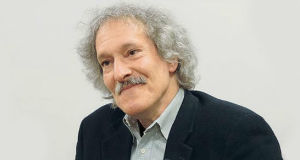
Fethullah Gulen Tolerance, Dialogue and Peace
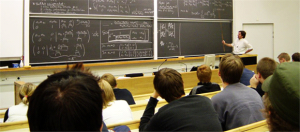 Turkey was new to such an emphasis on education, having never experienced such an event in its history. Today, special education programs in the media, and special features on the news, which regard education have become ordinary practice. Now, many people from all kinds of ideological backgrounds, professionals or amateurs in this field, open colleges in an organized manner. Education is a growing field in the private sector that gains importance with each passing day. And it has been the schools attributed to the Gülen movement and their successes that have triggered these developments.
Fethullah Gülen is almost the only person who has, both directly and indirectly, paid so much attention to the issue of education. In his sermons, conversations, articles, and essays, he has struggled to present the need to engage the masses in educational projects. He has tried to relay his message to all sectors of society, but especially to tradesmen and artisans who have come to listen to his sermons and lectures; he has exhorted them strongly to deal with the lack of proper education in the society.
Throughout his public life, Gülen has taught that learning is a duty for all humans and “by fulfilling it we attain the rank of true humanity and become a beneficial element of society” (Ünal and Williams 2000:308). Gülen is not only addressing the education of children in his writings but the education of all. The participants in the movement see themselves as learning or attempting to learn all the time and the dominant theme of the movement is the struggle for self-improvement.
Thus, for Gülen movement participants, when conscientiously performed, education has beneficial effects for individuals and the global community (Ünal and Williams 2000:306). Gülen believes that this approach is advanced by tolerance and patience and not by the suppression of opposition or the use of force. He states, “Improving a community is possible by elevating the coming generations to the rank of humanity, not by obliterating the bad ones” (The Fountain 2002:71).But for Gülen, education is not utilitarian; it is integral to his philosophy and religious world view. This world view is naturally shared by many in Turkey (Kalyoncu 2008) The Gülen movement originated as a faith-based with a strong cultural identity, but its educational and cultural projects are spreading into regions where world views have neither Turkic nor Islamic roots. Participants and supporters feel they have proved that the high-quality secular education and moral values combined with the altruism of teachers and sponsors are universal values which appeal to people all over the world.
Gülen regards and defines the matter of education as the biggest problem of not only our country but also of contemporary modern civilization. He believes that the education of humankind is the foundation of faith. At the root of the modern education crisis lies the fragmentation of the once-harmonious heart and mind connection in education and scientific thinking. Gülen contends that the new education system will not be able quell this crisis unless it redefines the natural and inherent relationship between humanity, the cosmos, and God. For the last couple of centuries, modern scientific thought and education has turned all humane, social, and ideological relationships into profane objects, stripping them of their sacredness and ascribing to them a positivist nature. This situation has led to corruption and a spiritual crisis that society currently witnesses. One of the innovations developed by Gülen is his holistic outlook in regard to the relationship between human being, the cosmos, and God—namely the harmonious unity of mind and heart. The colleges inspired by his ideas have questioned and overcome this extremely positivistic problem that deadlocks contemporary thought and education systems. It goes without saying that these schools do not offer their students a religious education. However, they do treat mind and heart simultaneously as the center of information and thought, and offer a system that views humans as existing in a harmonious relationship with the universe, society, and God. These schools work to create model individuals who are confident in themselves and the future; who are at peace with their own personality; who are respectful of their traditions, the roots of their faith, and their social identity; and who are open to modern scientific thought, innovation, and change. That is why, everywhere they have been opened, these colleges represent a new voice in education, and an excellent model of successful, hard-working, and open-minded students.
The Turkish education system is still mostly dependent on memorization. It is under the yoke of formal logic in many fields. The educational program at these schools established a mathematical and experimental form of logic, and a progressive method that is not based on memorization or repetition. They have brought a new dynamism to education. They have transformed the formerly stagnant and lazy attitude of Turkish education, improving and highlighting student learning in all subjects.