Fethullah Gulen Tolerance, Dialogue and Peace
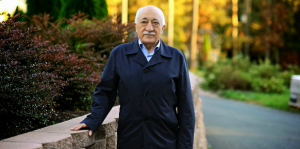 A recent report by Centre for Hizmet Studies in London, “A Hizmet Approach to Rooting out Violent Extremism”, offers a summary of Hizmet`s theological refutation of violent extremism. This timely discussion directs attention to Hizmet (literally ‘service’), an Islam-inspired transnational civil society movement with a presence in over 160 countries.
Two days after the bomb attacks to London`s subway system, Fethullah Gulen gave a talk to his following emphasizing the unfortunate portrayal of Islam in the face of this violence:
“We (Hizmet community/movement) must do our best to change these people’s views and opinions on these matters. It appears that some headway is being achieved by telling people about ourselves through efforts for dialogue and empathic acceptance. Islam cannot be represented by people who engage in certain acts; such people have fallen prey to their emotions, to anger and hatred.”
This was not the first time that Fethullah Gulen came out publicly denouncing terror and underlining the importance of dialogue and getting rid of the prejudices against Islam. On October 24, 2011 his talk was on “terror and suffering” with the following examples:
‘Achieving any goal by killing people is not the way of the Prophets or the friends of God. Prophet Muhammad (pbuh) was oppressed and persecuted as if compressed through a crusher for thirteen years but he did not even tread on an ant. He responded to and treated those arrogant, harsh and tyrannical people in a humane way. And we must teach these people of this way and spirit to prevent people from resorting to terrorism.’
Fethullah Gulen and Gulen Movement
Fethullah Gulen`s approach to the individual`s rights are same and as valuable as those that the whole community deserves and aims for and he made it clear by saying, thus, individual rights cannot be compromised, in his 2004 interview with the Kenya`s Daily Nation:
‘As far as the rights of humanity are concerned, based on its principle that “rights cannot be categorized as great and small,” Islam sees the right of an individual as being equal to the right of the community. It does not sacrifice one of these for the other, and it has introduced the principle that “if on a ship there are nine criminals and one innocent person, as long as that innocent person remains on the ship, the ship cannot be sunk in order to punish the nine criminals.”’
The report also underlines that Hizmet’s core teachings act as a positive counter narrative to such extremism, and describes the channels through which Hizmet popularizes that counter-narrative among the wider Muslim public. Also, the values and activism they underpin are diametrically opposed to and mutually exclusive with those associated with violent extremism; therefore the stronger one grows the weaker the other becomes. Accordingly, the goal of defeating extremism is made to ensue without being directly pursued.
Since Hizmet`s core teachings and practice are based on a comprehensive, deep rooted and robust interpretation of Islam’s primary sources, the Qur’an and Sunna, the question of what Hizmet thinks about, and how it responds to, violent extremism claiming an Islamic justification is most relevant to those concerned with this issue. The nature and features of Hizmet’s de-radicalization by default approach attempts to proactively address both facets of the radicalization process: ideology and inculcation, and draws attention to the challenges associated with linear, traditional, reactive policy-making directly aimed at defeating violent extremist ideology head-on. According to the report, how Hizmet undermines violent extremist ideology and tackles some of its root causes is by popularizing its core teachings, Hizmet empowers Muslims against violent extremist ideology and by winning over new recruits while addressing certain mindsets and conditions that violent extremists manipulate and exploit. Briefly, the researchers summarized Hizmet’s core teachings to include a foundational religious interpretation of the purpose of religion, which is bringing about a peace that is founded on universal human rights, the rule of law and universal human values.