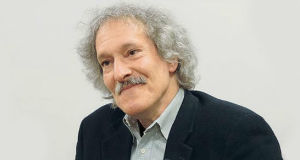
Fethullah Gulen Tolerance, Dialogue and Peace
 The death penalty is a controversial topic. In effect since time immemorial, the death penalty is seen as the ultimate punishment for those who commit the most heinous crimes. Those who kill children, who murder multitudes, and who seem completely devoid of remorse or moral compass are given this punishment as a way to make the world right again. However, the idea of what the death penalty is meant to be theoretically is often not what happens in reality. Often issues such as racism, prejudice, and poverty affect the decision to issue the death penalty, either openly or secretly. This makes an already difficult subject much more difficult, as one must decide if the potential of an innocent man being put to death is worth the risk.
In ancient times, leaders of towns, villages, states, and kingdoms could impose the death penalty at their own will. Although often a “trial” was conducted, these trials did not allow the accused to defend themselves, did not allow a decision by a jury of one’s peers, and were often mockeries of true justice. For example, if you owned a piece of land a governor wanted, he could accuse you of treason, read a list of charges against you, bring one or two witnesses paid to speak against you, convict you, and execute you, without you ever having a chance to defend yourself.
As time has progressed, especially in America, the death penalty process has become more and more complicated. The standard of proof is much higher, often needing DNA evidence or a “smoking gun” in order to convict. Appeals drag out for years and decades, in some cases despite the wishes of the convicted. Last minute reprieves, conversion of sentences, and overturned convictions are not uncommon. Jurors and judges consider mental capacity, childhood circumstances, prior good deeds, and more when deciding if this person truly is beyond all hope of redemption and deserving the death. Often, despite a horrible crime and an unrepentant criminal, the state still chooses life in prison without the possibility of parole as a better punishment.
In the state of Virginia, the only crime punishable by death is first degree murder. (“Crimes Punishable by the Death Penalty | Death Penalty Information Center”, n.d.) The murder must not only be premeditated, but also involve one of fifteen aggravating factors. Some of these include the use of torture, murder of a pregnant woman or a child, murder committed during a robbery, or murder with a sexual component. However, one of the aggravating factors is very subjective, in my opinion. One of the aggravating factors that make a murder case eligible to become a capital murder case is if the offender is likely to be a danger for society in the future. It seems like anyone convicted of murder, perhaps with the exception of someone murdering a person who has been abusing them, is likely to be dangerous. They have already demonstrated a tendency to violence and uncontrolled actions, or, what is worse - the controlled, contrived planned violent actions.
In theory I am pro death penalty. My religion allows the death penalty in very strict circumstances. It encourages the victims of crimes to reject the death penalty and instead offer mercy to the offenders, but if there is a confession of guilt with evidence of guilt and if the victim’s family refuses all other offers of recompense, imprisonment, etc., then they have the right to insist on the death penalty, and again, mercy is considered better for them. So to say that I am anti-death penalty would be to say that I am anti a basic tenant of my beliefs. However, in this country, at this time, under the current justice system, I am very much anti-death penalty. The amount of corruption, pure errors, and racism that is involved in many convictions is unconscionable. Since this is the case, and since I believe that we must protect innocent life at all costs, then I cannot support the death penalty at this time. My religion guides me in all I do in my life, and one of the basic ideas in my religion is, “If you kill one innocent person, it is as if you have killed all of humanity, and if you save one innocent life, it is as if you have saved all of humanity.” (Unal, 2008, p. 234) The thought that even one single innocent person might be executed prevents me from supporting the death penalty. The ideas of Mr. Fethullah Gulen, a world renowned Islamic scholar, support me in this matter. Especially his approach on capital punishment for apostasy in Islam and his interpretation of the Islamic rulings in that matter (Ozcan Keles, Today’s Zaman,3 November 2007).
The case that cemented my decision is the case of Frank Lee Smith. Frank Lee Smith grew up rough, the second child of a 14 year-old mother. He lived in extreme poverty, and his father was shot and killed by the police when Frank was still a child. After serving time as a juvenile for manslaughter and then being convicted of murder again at age 18 and serving an additional fifteen years in jail, it is understandable that when another violent murder took place Mr. Smith would be a suspect. Through police misconduct, witness misidentification, and a perhaps faked or coerced confession, Mr. Smith was sentenced to death, and died of cancer on death row insisting on his innocence. In the end, eleven months after his death, DNA evidence exonerated him and proved who the real killer was, a mentally ill man living in the Florida state hospital for the mentally ill. (“The Innocence Project - Know the Cases: Browse Profiles:Frank Lee Smith”, n.d.)
Frank Lee Smith was not convicted on evidence, but on his past history. Only one eyewitness indicated he was in the neighborhood prior to the crimes, and that witness later recanted and indicated the true killer. The state refused to do DNA testing as it became more common, despite the recanted identification of the witness. In fact, only because Mr. Smith was lucky enough to get the Innocence Project to take his case was he posthumously exonerated and the real murder found. (“A Closer Look - Eight Things To Know About This Case | Requiem For Frank Lee Smith | FRONTLINE | PBS”, n.d.)
Frank Smith protested his conviction until the bitter end. He was unwavering in his insistence of his innocence. His state of conviction, Florida, has the most overturned death penalty cases of any state, and yet continues to be among the quickest to impose the death penalty in the nation. This system is broken, and I am afraid there is no way to fix it 100 percent, and therefore, we must insist that it be suspended until a fix is found, or terminated, as the Supreme Court rightly did in 1972. If we as a country murder an innocent man, then we are no better than the murderers we are executing.
I don’t believe for an instance that the death penalty reduces crime. People who commit crimes are generally not thinking of the possibility of being caught. They certainly aren’t thinking that if they are caught they will be convicted and sent to death row. Most murders are committed at the heat of the moment as acts of anger and outburst. Even the cases that are though-out are committed with the thought that I would never be caught. Murderers are often not the brightest people, and they often lack the capacity to think of the long term consequences to their actions. It seems that suggesting that the fear of the death penalty will prevent crime is absurd.
I support the idea of incapacitation, especially for crimes such as murder, child abuse, and sex crimes. I think that especially for crimes involving children or the mentally ill as victims, there can be no second chances. I also think that prison must include efforts for rehabilitation and making the inmates feel “human” again. Imagine being sentenced to life without parole for a murder you committed at the age of 18. You will never have a family, hold a job, attend your siblings’ weddings, attend your parents’ funerals, etc. You are essentially erased from the society, and although a very few close family members or friends will visit you for some time, it is very likely that within a few years only your mother will rarely come to see you. Life will go on without you. In this circumstance, there are two normal modes of response. The first is to give up all hope, and to commit suicide. The second is to be angry at the world, and exercise whatever small modicum of control you still have- whether that be killing a cellmate or defacing your solitary confinement cell. Neither option serves any benefit to you or to society.
The example of Warden Burl Cain at Angola Pen. in Louisiana shows that you can take the most violent prison filled with men who will never step foot on the sand again or eat at a McDonald’s and turn it into a place of love and hope and purposefulness. This is what we should be doing to convicted offenders, not simply throwing away the key.
I understand the death penalty. I get why a victim’s family would want to have it imposed. As a father of five, soon to be six children 10 years and younger, I feel confident that if any harm would come to any of them I would enforce the death penalty myself on the perpetrator without waiting for the justice system to slowly grind along, though I would pray that I would control myself and show mercy. However, no matter what, there will always be those innocents who slip through the cracks, those people who might have committed twenty other heinous crimes but are innocent of the one that sends them to death row. There will always be lying witnesses, corrupt police, false confessions, and tainted evidence. We as a country are better than allowing an innocent man to lose his life. We cannot support the death penalty.
References
A Closer Look - Eight Things To Know About This Case | Requiem For Frank Lee Smith | FRONTLINE | PBS. (n.d.). Retrieved from http://www.pbs.org/wgbh/pages/frontline/shows/smith/eight/
Allen, H. E. (n.d.). Corrections in America An Introduction (13th ed.). Pearson.
Crimes Punishable by the Death Penalty | Death Penalty Information Center. (n.d.). Retrieved from http://www.deathpenaltyinfo.org/crimes-punishable-death-penalty#BJS
The Innocence Project - Know the Cases: Browse Profiles:Frank Lee Smith. (n.d.). Retrieved from http://www.innocenceproject.org/Content/Frank_Lee_Smith.php
Unal, A. (2008). The Qu’ran with Annotated Interpretation in Modern English. Tughra Books.