Fethullah Gulen Tolerance, Dialogue and Peace
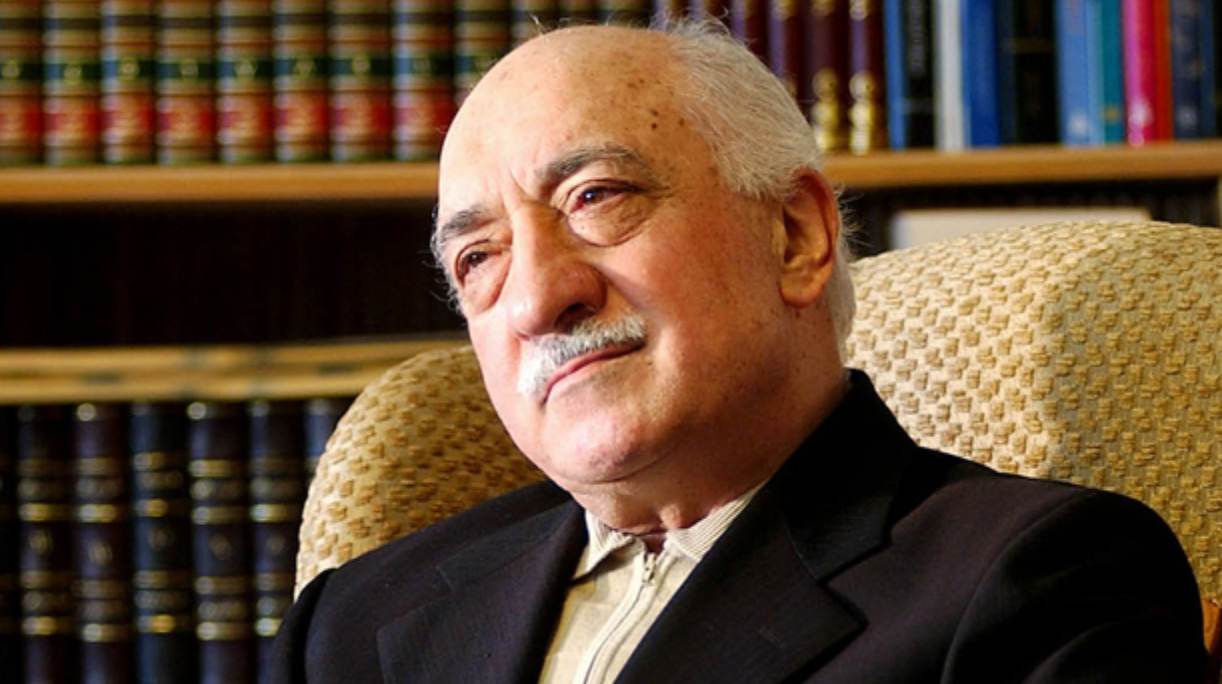 A recent crisis of Turkish democracy has led many journalists and scholars to undertake full-time research on various aspects of local political processes and institutions in Turkey. A number of observers have particularly focused on the role of the Gulen community in modern Turkish history. Some praised the Gulen Movement for its commitment to liberalism and modernity. Others blamed it for everything that went wrong in the country. Yet few studies and commentaries placed the analysis in a proper historical context. Assessing what is new and what is not in the debates that dominate the daily news requires careful review of the available literature on the issue.
More than a decade ago, Lynne Emily Webb wrote a book, which became one of the earliest comprehensive accounts of the Gulen Movement published in English language. In seven sections the author presented to the Western public a distinctive perspective on various controversies about radical secularism and fundamentalism in Turkey. Overall, she looked into public attitudes towards Fethullan Gullen and the movement inspired by his ideas. In particular, she focuses on certain claims made about Mr. Fethullah Gulen and his replies to them. Arguments presented in the book demonstrate that little has changed in the reasoning of the movement’s opponents since the release of the book in the late 1990s.
In the first two sections Webb presents the historical context of the rise of the Gulen community in Turkey and discusses the general outlines of the movement. She draws particular attention to the military coup d’états, terror, and erosion of social and moral values in the society. The author points out the disintegration in Turkish society and weakening of the traditional values as some of the main sources of problems in the country. She also draws attention to education, which was one of Turkey’s most important issues since the fall of the Ottoman Empire. According to Webb, universities became points of political focus and were in the forefront of the three military coup d’états. In the second section of the book discussion revolves around the personality of Fethullah Gulen and outlines of his movement. Webb argues that Fethullah Gulen aims for Turkey “to be in a position to represent peace, tolerance, good intention, and togetherness inside and outside of the country and to build a universal bridge in the name of peace between individuals, different segments of the society, societies, and those individuals and countries with different religions and worldviews” (p.18)
Fethullah Gulen and Gulen Movement
In the third section of the book, the author examines some of the reasons of the hostility toward Fethullah Gulen. First, Webb identifies some of Mr. Fethullah Gulen’s enemies. Then she describes common characteristics of Gulen’s adversaries and examines their claims. In her analysis Lynne Webb suggests that there was no difference in the news written previously in the press before the coups of May 27 and March 12 and the news being given in the February 28 period.[1]
Lynne Webb devotes the rest of the book to explaining the arguments in defense of the Gulen movement. In the fourth section, the author examines Mr. Ecevit’s (former Prime Minister of Turkey) opinion about Mr. Fethullah Gulen and his movement. She points out that in Ecevit’s eyes Fethullah Gulen and the community led by him presented a positive potential for Turkey to take firms steps towards becoming a strong country. According to Webb, Ecevit was sure that the Gulen movement has always been against instigation of disorder and violence and always supported order and security. The fifth section focuses on the responses of Fethullah Gulen to accusations made against him. Lynne Webb examines about seven dozens of claims and Gulen’s answers to those allegations. In the sixth section, the author attempts to explain the reader why there is so much malice and distortion that surround the daily news about the Gulen movement. Webb suggests that one of the reasons for numerous factual mistakes, false assertions and allegations is bad intention. In the final section, Lynne Emily Webb discusses examples of responses given by the courts to allegations about Fethullah Gulen. Webb finally reminds a simple truth that in a lawful state, power is in the hands of justice and is not in the hands of “persons who are instruments of government” (p.155).
Overall, at the time of its first publication, this book presented a unique contribution to the study of the Gulen movement. Not only the book presented a number of novel perspectives on a series of sensitive issues in Turkish public life and politics, but also managed to identify some of the most persistent leitmotifs in Turkish cultural and political history. This makes this assessment of a movement inspired by the ideas of Fethullah Gulen an essential reference material for future studies on the topic. Those interested in understanding the Gulen Movement and Fethullah Gulen’s philosophy should read this book.
Fethullah Gulen: Is there more to him than meets the eye. Lynne Emily Webb. Izmir, Turkey: Mercury International Publishing, 2000. 178 pp.; ISBN: 975-6906-02-2.
[1] Prior to the 1997 military memorandum issued on February 28, there had been three other military coups in the history of the Turkish Republic: The coup of May 27th (1960), the coup of March 12 (1971), and the coup of September 12 (1980).